

How to Get More Subscribers for Your Newsletter (By Turning Website Visitors Into Sign-Ups)
Getting people to visit your website is only half the battle. The real value comes when those visitors take the next step—subscribing to your newsletter.
If your website traffic is steady but your subscriber list isn’t growing, the issue usually isn’t the quality of your content. It’s how, when, and why you’re asking visitors to subscribe.
Below are practical, proven ways to turn more of your existing website visitors into newsletter subscribers—without being pushy or gimmicky.
Start With a Clear Reason to Subscribe
Most subscribe forms fail because they ask visitors to “Join our newsletter” without explaining what’s in it for them.
Your website visitors are busy. They need a clear and specific reason to hand over their email address.
Instead of vague wording, focus on outcomes:
-
What will they learn?
-
What problem will your newsletter help them solve?
-
How will it make their business or life easier?
For example, a business-focused site might promise weekly marketing tips, local business opportunities, or practical strategies that can be applied immediately. The clearer the benefit, the higher your sign-up rate.
Place Your Subscribe Form Where Visitors Are Already Engaged
Many websites hide their subscribe form in the footer and expect results. If visitors have to search for it, most won’t bother.
Your subscribe form should appear in areas where visitors are already paying attention, such as:
-
At the end of a blog article
-
Mid-article, after valuable information has been delivered
-
In the sidebar on desktop
-
As a simple, well-timed pop-up (not immediately on page load)
The key is context. Ask people to subscribe after they’ve experienced value, not before.
Match Your Subscribe Message to the Page Content
A generic subscribe form across your entire website misses a big opportunity.
If someone is reading a blog article about marketing, your subscribe message should connect directly to marketing. If they’re reading about business funding, your newsletter offer should align with that interest.
When the subscribe message feels relevant to what they’re already reading, it feels helpful instead of interruptive.
Reduce Friction in the Sign-Up Process
Every extra field you add to a subscribe form reduces conversions.
If your goal is to grow your list, keep it simple:
-
Ask only for an email address (and possibly a first name)
-
Avoid unnecessary checkboxes or long explanations
-
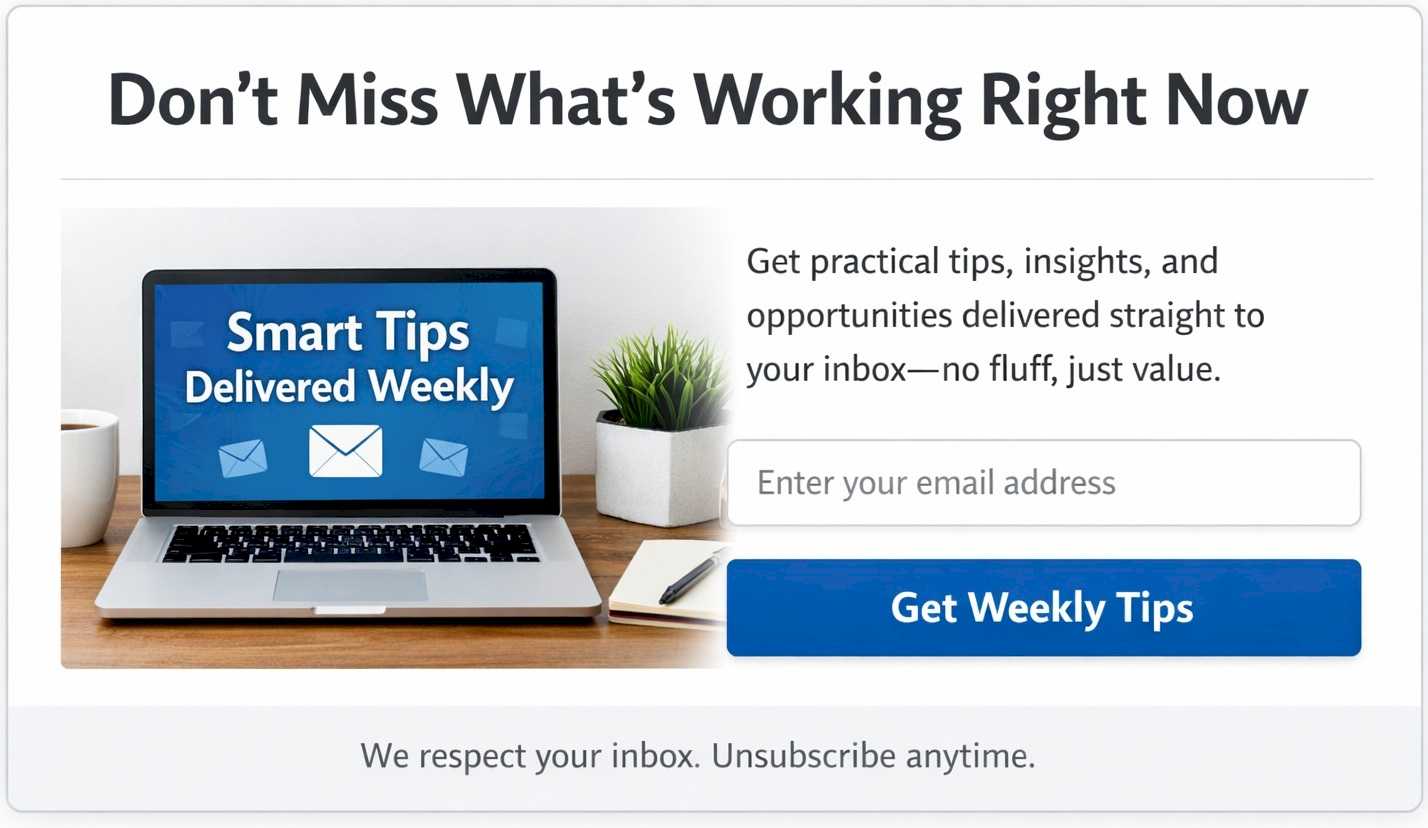
Make the submit button action-oriented, such as “Get Weekly Tips” or “Send Me the Updates”
The easier it is to subscribe, the more people will do it.
Use Social Proof to Build Trust
Visitors are far more likely to subscribe if they feel confident your newsletter is worth their time.
Simple trust-building elements can significantly improve sign-ups, such as:
-
Mentioning how many people already subscribe
-
Highlighting who the newsletter is for
-
Reassuring readers they won’t be spammed
You don’t need testimonials to start. Even a short line explaining the value and frequency of your emails can make a difference.
Turn Your Best Blog Content Into Subscription Triggers
Your most popular blog articles are prime opportunities for growing your list.
Review which articles get the most traffic and intentionally add:
-
A strong subscribe section at the end
-
A call-to-action that ties directly to the topic
-
A short reminder of what subscribers gain beyond that single article
Visitors who stay long enough to read an entire post are already interested. That’s the perfect moment to invite them to stay connected.
Offer a Simple Incentive (Without Overcomplicating It)
You don’t need an elaborate lead magnet to grow your list. Sometimes a simple incentive works just as well, especially for local or niche audiences.
This could be:
-
Exclusive tips not shared on your website
-
Early access to opportunities or events
-
A weekly summary that saves readers time
The incentive should feel natural to your brand and genuinely useful to your audience.
Remind Visitors More Than Once
Most visitors won’t subscribe the first time they see your form—and that’s normal.
Strategically repeating your subscribe opportunity across your site helps reinforce the value of your newsletter. Just make sure the message stays consistent and respectful.
You’re not being annoying—you’re giving people multiple chances to say yes.
Track, Adjust, and Improve
Finally, pay attention to what’s working.
Test:
-
Different wording on your subscribe form
-
Placement on your pages
-
Timing of pop-ups or banners
Small adjustments can lead to noticeable improvements over time, especially if your website already receives consistent traffic.
Final Thoughts
Growing your newsletter doesn’t require more visitors—it requires better conversion.
When your subscribe form is clear, relevant, easy to use, and positioned at the right moment, your website starts working for you long after visitors leave.
Your newsletter should feel like a natural next step, not a sales pitch. Get that right, and your subscriber list will grow steadily and sustainably.
Is your newsletter turning visitors into sign-ups? If yes, let us know what you're doing in the comments below. If not, click here to get more leads and sign-ups to your website or newsletter.
Login or create an account to leave your newsletter tips or comments below.