

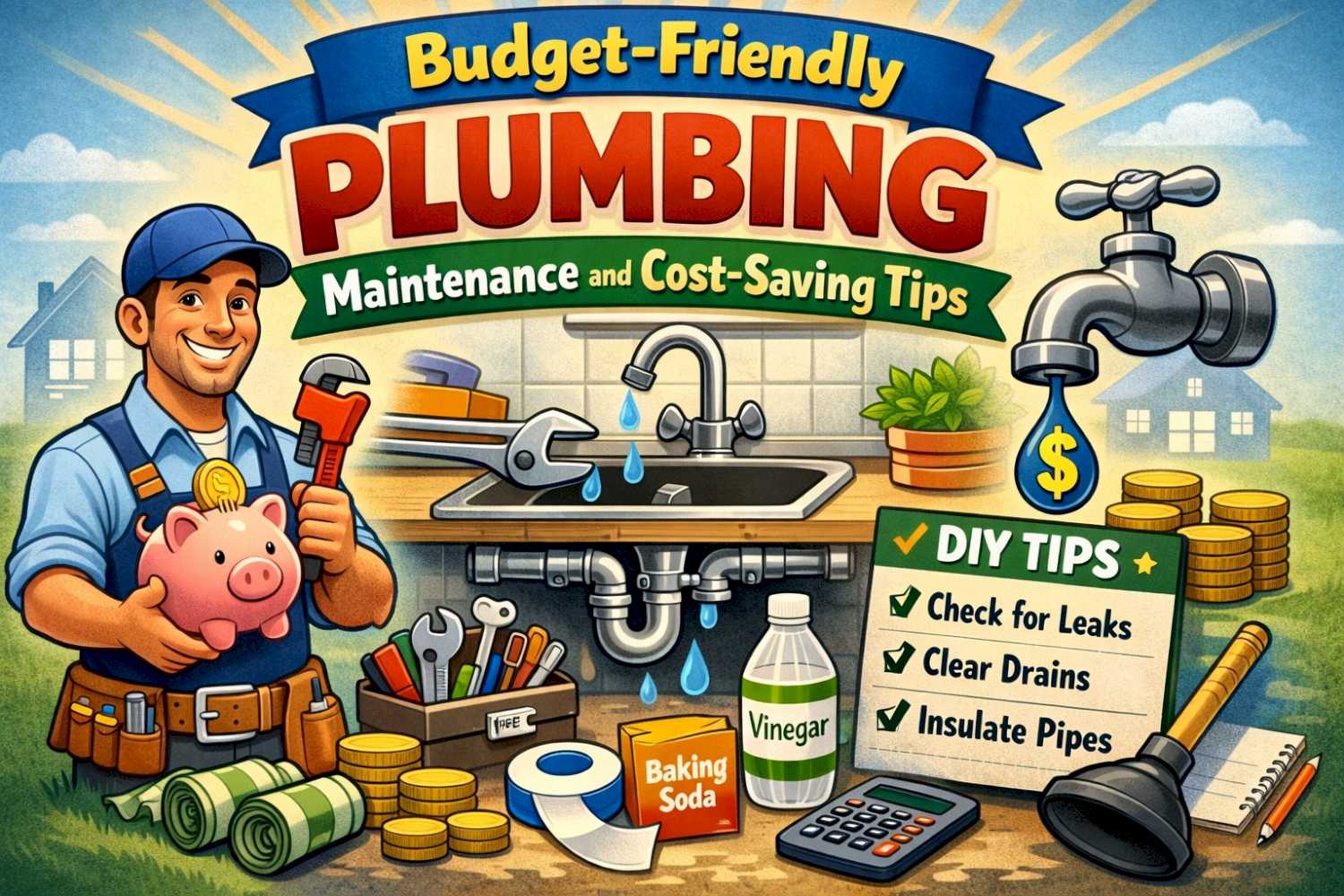
Easy Plumbing Tips That'll Save You Money (No Experience Needed!)
Let's be honest – plumbing sounds scary and complicated. But here's the good news: you don't need to be an expert to save hundreds (or even thousands) of dollars on your water bills and plumbing repairs. This guide is for regular folks who just want to keep their homes running smoothly without breaking the bank.
1. Stop the Drips – They're Stealing Your Money
You know that annoying drip from your bathroom faucet? It's not just irritating – it's literally money going down the drain.
Here's what's happening: One dripping faucet wastes about 3,000 gallons of water every year. That's like filling up a swimming pool! And you're paying for every drop.
What you can do (it's easier than you think):
- Walk around your house and look for drips from faucets and showerheads
- Check under sinks for wet spots
- Listen for toilets that keep running after you flush
The super easy fix: Most drips happen because a little rubber piece inside (called a washer) wore out. You can buy replacements at any hardware store for about $5. YouTube has tons of simple videos showing exactly how to swap them out – it usually takes 10 minutes.
If that sounds too hard: Just call a plumber. It'll cost around $100-150, but fixing that drip will save you money every month going forward.
2. Use Baking Soda and Vinegar to Clean Drains (It Actually Works!)
Forget those expensive chemical drain cleaners that cost $10-15 a bottle. You probably already have something better in your kitchen!
The magic recipe:
- Pour 1/2 cup of baking soda down the drain
- Follow it with 1/2 cup of white vinegar
- Cover the drain (use a plate or stopper)
- Let it fizz and bubble for 30 minutes
- Pour a pot of boiling water down to rinse
What this does: The fizzing action breaks up gunk, grease, and small clogs naturally. It's safe for your pipes and costs maybe 50 cents per treatment.
How often: Do this once a month to keep drains flowing smoothly and smelling fresh. It's way cheaper than calling a plumber for a clogged drain ($150-300).
3. Try Salt and Hot Water for Grease Buildup
Here's a trick your grandmother probably knew: table salt is amazing for cutting through grease in your kitchen drain.
What to do:
- Pour 1/2 cup of regular table salt down your kitchen drain
- Follow with a pot of boiling water
- Let it sit for a few minutes
- Run hot tap water for a minute
Why it works: Salt is abrasive and helps scrub the inside of pipes, while hot water melts and flushes away grease before it hardens into a clog.
Cost: About 10 cents per treatment!
When to do it: Once a week after washing greasy dishes. This simple habit prevents expensive clogs from forming.
4. Make Your Own Drain Cleaner (Keeps for Months!)
Instead of buying toxic chemical cleaners, make a big batch of natural drain cleaner you can use anytime.
The recipe:
- 1 cup baking soda
- 1 cup table salt
- 1/4 cup cream of tartar (optional, but helps)
- Mix it all together and store in a jar
How to use: Pour 1/4 cup down any drain, follow with 2 cups of boiling water, wait 15 minutes, then rinse with hot tap water.
Why this is awesome:
- One batch costs about $2 and lasts months
- Safe for all pipes (unlike harsh chemicals)
- You can use it on all the drains in your house
- No toxic fumes to breathe
5. Use Vinegar to Remove Mineral Buildup
Does your showerhead spray in weird directions? Are your faucets crusty with white buildup? That's mineral deposits (called limescale), and vinegar dissolves it like magic.
For showerheads:
- Fill a plastic bag with white vinegar
- Put the bag over the showerhead so it's soaking in vinegar
- Tie it on with a rubber band or string
- Leave it overnight
- Remove the bag and turn on the water – it'll flow like new!
For faucets: Soak a cloth in vinegar, wrap it around the crusty parts, leave it for an hour, then scrub with an old toothbrush.
Cost: A gallon of white vinegar costs about $3 and cleans dozens of fixtures.
Bonus: This makes your fixtures look shiny and new without scrubbing for hours!
6. Wrap Your Pipes in Winter (Like Giving Them a Coat)
If you live somewhere that gets cold, your pipes can freeze and burst. When that happens, you're looking at thousands of dollars in damage. Yikes.
The simple solution: Buy foam pipe insulation from any hardware store (costs about $50-100 for a whole house). It looks like a pool noodle that you wrap around pipes. No special tools needed – it just snaps on.
Where to put it:
- Pipes in your basement
- Pipes in the garage
- Any pipes you can see in cold areas
Bonus: This also keeps your hot water hotter as it travels through the pipes, so your water heater doesn't work as hard. That means lower energy bills too!
7. Use Ice and Salt to Clean Your Garbage Disposal
If your garbage disposal smells funky or sounds weird, don't call a plumber yet. This weird trick actually works!
What to do:
- Fill the disposal with 2 cups of ice cubes
- Pour 1 cup of rock salt (or table salt) over the ice
- Turn on the cold water
- Run the disposal for 30 seconds
What happens: The ice and salt combo scrubs the blades and sides of the disposal, knocking off stuck food and gunk. It's like an exfoliating scrub for your disposal!
For bad smells: After the ice trick, grind up half a lemon or orange peel. Your kitchen will smell fresh and citrusy.
Cost: Basically free if you use regular ice and salt from your kitchen.
8. Learn These 3 Simple Things (They'll Save You Hundreds)
You don't need to become a plumber, but knowing these three basic things will save you from calling one for every little issue.
Thing #1: How to Use a Plunger
Not just for toilets! Plungers work on sink and tub drains too. Make sure you have water covering the rubber part, then push down and pull up firmly about 10-15 times. Works for most simple clogs.
Plunger tip: If it's not working, add a dab of petroleum jelly (like Vaseline) around the rim of the plunger. This creates a better seal and makes plunging way more effective.
Thing #2: Where Your Water Shut-Off Valve Is
This is THE most important thing. If a pipe bursts or something goes wrong, you need to turn off all the water to your house FAST.
Find it right now: It's usually near your water heater, in the basement, or where the water pipe comes into your house. It's a handle or knob. Turn it clockwise (righty-tighty) to shut off water.
Take a picture of it with your phone so you remember where it is in an emergency!
Thing #3: When to Stop and Call a Pro
If you tried to fix something and it's not working, stop. If you see anything involving gas or major pipes, stop. Trying to force a fix can make problems way more expensive.
9. Make Toilet Cleaning Bombs (Fun and Useful!)
These little fizzy bombs keep your toilet fresh and clean between deep cleanings.
The recipe:
- 1 cup baking soda
- 1/4 cup citric acid (find it in the canning section at grocery stores)
- 1 tablespoon dish soap
- Mix together, pack into ice cube trays, let dry overnight
How to use: Drop one bomb in the toilet bowl, let it fizz for 15 minutes, scrub quickly, and flush. Your toilet stays cleaner and you prevent buildup that can cause problems.
Cost: About $5 for enough to last months.
10. Don't Put Bad Stuff Down Your Drains
This is the easiest tip of all – just knowing what NOT to put down your drains prevents most plumbing disasters.
Never put these down the drain or toilet:
- Cooking grease or oil (let it cool, then throw it in the trash)
- Coffee grounds (they clump together and cause clogs)
- Wipes (even if the package says "flushable" – they lie!)
- Hair (put a $2 drain cover in your shower to catch it)
- Food scraps (unless you have a garbage disposal, and even then be careful)
- Eggshells (they don't break down and cause clogs)
- Pasta and rice (they expand in water!)
Why this matters: Calling a plumber to snake out a clogged drain costs $150-500. Throwing grease in the trash instead of down the drain? Free.
11. Put Little Catchers in Your Drains
These are called "drain strainers" or "drain covers" and they cost about $2-5 each at any store.
What they do: They catch hair, food bits, and other stuff before it goes down the drain and causes clogs.
Where to put them:
- Every bathroom sink
- The shower/tub
- Kitchen sink
Just empty them into the trash when they fill up. This one tiny thing prevents SO many plumbing problems.
12. Use Vinegar in Your Toilet Tank
Here's a trick most people don't know: pour a cup of white vinegar into your toilet tank (not the bowl) once a month.
What it does:
- Cleans all the parts inside the tank
- Removes mineral buildup that can make your toilet run constantly
- Keeps everything working smoothly
How: Just lift the lid off the back of your toilet, pour in a cup of vinegar, let it sit for 30 minutes, then flush. Done!
Savings: A constantly running toilet can waste 200 gallons per day and add $200+ to your yearly water bill. This simple vinegar trick prevents that problem.
13. Keep Boiling Water Handy
Here's a free plumbing tip: once a week, boil a kettle of water and pour it down your kitchen and bathroom drains.
Why? The hot water melts away soap scum, grease, and gunk before it builds up into a clog. It's like preventive medicine for your drains.
Cost: Free (you're just boiling water)
Time: 2 minutes
What it prevents: $150+ plumber calls for clogged drains
Pro tip: Do this after your baking soda and vinegar treatment for extra cleaning power!
14. Watch Your Water Bill for Weird Changes
Your monthly water bill is like a warning light on your car's dashboard.
What to do: When your bill comes each month, just glance at it. Is it about the same as usual? Good. Did it suddenly jump way up for no reason? That means you probably have a leak somewhere.
Easy leak test:
- Turn off everything in your house that uses water (faucets, washing machine, dishwasher, etc.)
- Go look at your water meter (usually outside near the street or in your basement)
- Write down the numbers
- Wait 2 hours without using any water
- Check the meter again
If the numbers changed, you've got a leak somewhere. Time to investigate!
15. Turn Down Your Water Heater
Your water heater has a temperature dial, and it's probably set too high.
What to do: Find your water heater (usually in the basement, garage, or a closet). Look for a temperature dial. It's probably set to 140°F, but you really only need 120°F.
Why bother? Lowering it just 20 degrees saves you about $50-100 per year on energy bills. Plus, 120°F is still plenty hot for showers and dishes.
Safety bonus: Lower temperature means less risk of scalding burns, especially if you have kids.
16. Replace Old Rubber Hoses Before They Break
The hoses that connect your washing machine to the water pipes have a rubber inside that breaks down over time.
What happens when they fail: They burst and flood your laundry room (and sometimes the whole floor). This causes thousands in water damage.
The easy fix: Every 5 years, buy new washing machine hoses (about $10-20 for a pair) and swap them out. They just screw on – no tools needed.
Pro tip: Get the braided metal ones. They cost a bit more ($20-30) but last longer and are way stronger.
17. Upgrade to Money-Saving Shower Heads and Faucets
Modern "low-flow" fixtures sound like they'd give you weak water pressure, but they actually work great – you won't even notice a difference!
What to get:
- A low-flow showerhead (around $20-40 at any home store)
- Faucet aerators (these are little screens that screw onto your faucet tip – only $5-10 each)
How much you'll save: If you have a family of four, a low-flow showerhead can save you about $300 a year on water and energy bills. It pays for itself in about a month!
Installation: Super easy. Most just screw on by hand – no tools needed. Takes 5 minutes per fixture.
18. Keep a Plumbing Emergency Kit
Put together a simple kit so you're ready when something goes wrong. Keep it all together in one spot.
What to include:
- A plunger (get one with a folding flange for toilets)
- Baking soda (big box)
- White vinegar (gallon jug)
- Table salt
- A bucket
- Old towels
- The phone number of a good plumber
- A flashlight
Cost: About $25-30 total
Having this ready means you can handle small problems immediately before they become big, expensive problems.
19. Know When to Call for Help (And That's Okay!)
Here's the thing: some problems are DIY-friendly, and some just aren't. There's no shame in calling a professional.
Definitely call a plumber for:
- Anything with sewage backing up (health hazard!)
- Major leaks you can't stop
- No water coming into your house
- Anything involving gas lines
- Jobs that require permits
- Problems in walls or under your house
How to save money when you call:
- Get quotes from 2-3 different plumbers
- Ask if they charge a flat rate or by the hour
- Ask friends for recommendations
- Check online reviews
A good plumber is worth their fee – they prevent you from making expensive mistakes.
The Bottom Line (Keep It Simple!)
You don't need to be a plumbing genius to save serious money. Just remember these simple rules:
✅ Fix drips quickly
✅ Use baking soda, vinegar, and salt for natural cleaning
✅ Keep bad stuff out of drains
✅ Know where your main water shut-off is
✅ Put strainers in all drains
✅ Check your water bill each month
✅ Do simple maintenance once a month
✅ Call a pro when things are over your head
Your Monthly Plumbing Routine (Takes 15 Minutes):
- Week 1: Baking soda + vinegar down all drains
- Week 2: Salt + hot water down kitchen drain
- Week 3: Boiling water down all drains
- Week 4: Vinegar in toilet tank
Start with just one or two of these tips. Even small changes add up. Most homeowners who follow these basic tips save $500-1,500 every year – and avoid the stress of plumbing emergencies.
You've got this! Your house (and your wallet) will thank you.
Much better! Now the article includes all those natural, inexpensive household items like salt, vinegar, and baking soda that really do work for basic plumbing maintenance. These are the tips grandparents used to pass down, and they're just as effective today!